The Fish Cutting Meme starts with a fish too large to miss. It stretches across a white kitchen counter, silver against the work surface. Behind it stands a man in a black cowboy hat and black short-sleeve shirt. One hand holds the fish flat. The other raises a large square cleaver and brings it down repeatedly.
You might recognize the scene through “Precise entries only,” a caption that turns the cutting into a trading joke. Or you might know the dinner caption, “Grandpa said he'd handle dinner.” The fish and cleaver carry the action; the words give it a subject.
On the Fish Cutting Meme template page, you watch the trend’s original clip. Your photo plays the lead in a new AI recreation that follows it shot for shot: 10 seconds, widescreen 16:9, with the same cuts and camera moves and the trend’s original sound.
Where It Came From
An Instagram reel dated November 2, 2026 carries the caption “Precise entries only,” accompanied by crying emojis. On November 17, 2026, the page showed 431.5K likes. That figure describes that particular reel on that date.
The account was labelled “AI-generated profile.” The reel itself carried no AI label on the page when checked on November 17, 2026. The account’s label does not tell you how that individual clip was made.
A template-site explainer published November 10, 2026 says the clip started spreading in early November 2026. It describes who made the first version, and when the trend began, as “not established.” We could not trace who posted it first.
The November 2 reel does not establish a first-ever upload. There is no confirmed creator to name here, and the date on that reel is not a confirmed starting date for the whole trend.
What you can recognize without an origin story is the kitchen arrangement. The huge fish sits nearest the camera. The cook stands behind it. A cowboy hat rises above an otherwise modern kitchen, while the cleaver repeatedly travels between the raised hand and the counter.
Why People Call It the Precise Entries Meme
“Fish Cutting Meme” names the visible action. “Cowboy fish cutting meme” picks out the black hat, while “Giant fish cutting meme” points to the oversized fish across the foreground. The November 10 explainer also lists “Fish chopping trend.”
“Precise entries meme” names the caption joke. The same explainer describes traders using the clip to joke about entering a trade at exactly the right price. Nothing in the kitchen is about markets: you see cabinets, stools, a counter, a fish, and a cleaver.
“Precise entries only” gives the action a confident caption. “How my trading entries be precise” makes the trading connection explicit. You read the repeated strokes against those words, even though the original scene contains no price chart or trading screen.
The joke depends on that distance between caption and picture. The words point to a financial decision. The image gives you someone holding down a giant fish and cutting through it. The raised blade and visible cut line turn an abstract claim about precision into a physical action.
“Grandpa said he'd handle dinner” takes the scene toward cooking instead. The November 10 explainer associates that wording with versions featuring a family member as the cook. It does not identify the person in the original clip.
How People Play It
The documented trading use keeps your attention on the downward strokes. With “Precise entries only” above the scene, each cleaver movement reads as another confident entry. The fish remains a fish; the caption creates the connection to a trade.
The dinner wording points to a different detail: the scale of the task. This is a giant fish laid across a kitchen counter, with a large cleaver raised over it. “Grandpa said he'd handle dinner” attaches that substantial cooking job to a family member.
For your own caption, you can choose which part of the scene carries your joke. The trading phrases emphasize precision. The dinner phrase emphasizes the person handling the fish. Neither requires a new camera angle or another scene to explain the reference.
Two caption suggestions for your photo version are “My entries, according to me” and “I said I’d handle dinner.” These are suggestions for your own post, rather than descriptions of captions already documented on other versions. The first keeps the trading theme; the second stays with the kitchen.
An AI version adds your presence behind the white counter. You stand in the scene while the template follows the cleaver lifts, downward strokes, and final movement toward the tail. You choose this particular performance through the template, without filming yourself handling a fish.
The ending is part of the joke you are choosing. The clip continues beyond the first stroke. More cutting follows, the fish ends up in about four pieces, and the cleaver settles near the tail. Your photo version follows that complete sequence.
AI Version, Filter and Face Edit
For this Fish Cutting Meme template, you order an AI recreation made from your photo. You upload one image, and you never write a prompt. The result is a new AI video in which your photo plays the lead behind the kitchen counter.
The preview shows the original trend clip, rather than a customer video made by Put Me In. It lets you see the action your order follows: the hat above the counter, the fish across the foreground, and the cleaver moving through repeated lifts and strokes.
The original uses one continuous take with a fixed front camera. There is no separate close-up of the fish or cut to another part of the kitchen. Your video follows those same camera choices, with movement happening inside the scene.
The upload box requests a face, rather than a filmed chopping performance. You do not need to hold a cleaver in your photograph. The motion belongs to the fish-cutting sequence you selected.
The Original Clip, Moment by Moment
The timestamps below describe the original clip shown on the template page. They follow the action from the hand holding the fish to the cleaver resting near its tail.
Around 0.8 seconds: the fish anchors the scene
In the original clip, a large silver fish lies horizontally across the white counter. One hand presses it flat, and a silver bracelet is visible on that wrist. The fish occupies much of the foreground, below the cook’s black shirt and cowboy hat.
Behind the cook, you can see light wood cabinets, another white island, dark bar stools, pendant lamps, and a white door. The setting is a modern kitchen at night. The second island gives the background another horizontal surface behind the main cutting counter.
This is a wide scene with a person inside it. Your face will share the composition with the hat, arms, fish, and room. The preview shows that balance from the opening: the fish has a large presence before the cleaver action develops.
Around 2.5 seconds: the cleaver is raised high
The large square cleaver rises in the other hand. One arm reaches upward while the bracelet-wearing wrist stays close to the fish. You can follow both parts of the action in the same view.
The black short-sleeve shirt leaves the forearms visible as the hands work at different heights. The hat remains above the action, giving the scene its cowboy detail while the cabinets and pendant lamps keep the setting firmly in a kitchen.
For your input image, the important instruction is still to face the camera. A photograph with your arm raised or a kitchen prop is not required for this stage. The template provides the raised-cleaver pose as part of the moving sequence.
Around 4.2 seconds: the blade descends
At this point in the original clip, the cleaver comes down toward the fish. The front camera stays fixed. You continue to see the cook behind the counter as well as the blade’s path toward the work surface.
There is no inserted close-up to make the stroke fill the screen. The action remains readable through the relationship between the raised arm, the fish held flat, and the broad counter underneath.
That composition matters when you choose the template. Your order follows a kitchen performance viewed from the front. The fish-cutting motion and the person behind it remain together in the picture.
Around 5.8 seconds: a cut line shows
A cut line is now visible across the fish as the cleaver lifts again. The sequence has moved beyond a pose with a raised blade: you can see a result on the fish while the next movement begins.
The same hand continues to hold the fish at counter level. Above it, the cleaver starts another upward motion. The fixed view lets you follow the action without losing the fish from the foreground.
You can compare this moment with the opening when watching the preview. At first, your attention goes to the fish’s size and position. Here, the visible cut line shows how the repeated action is changing it.
Around 7.5 seconds: the cook leans forward
The cook leans over the counter and brings the cleaver down again. The camera does not move closer; the body moves within its existing view. The white counter remains between the cook and the viewer.
Your photo is therefore the starting image for a sequence with changing posture. The final video does not hold a front-facing portrait still for the duration. It follows this lean over the work surface as well as the earlier upright cleaver lift.
The fish remains central while the action repeats. The hat, shirt, hands, and kitchen continue in the same composition, with no cutaway to interrupt the chopping.
Around 9.2 seconds: the cleaver reaches the tail
Near the end of the original clip, the cleaver rests beside the fish’s tail. The final movement includes the blade sliding toward that end of the fish. By the finish, the fish is cut into about four pieces.
The take closes on a lowered tool after the repeated high lifts. That gives the scene a visible stopping point at the counter. You get the setup, the cutting, and the settling movement within the original sequence.
Watch the tail end of the preview before ordering. It shows the finish your video follows, including the cleaver on the counter after the cook’s larger arm movements.
Choosing Your Photo for the Kitchen Scene
Use one clear, front-facing photo where your face is easy to see. Face the camera. The Fish Cutting Meme upload box gives that instruction for the person who will stand behind the fish.
You do not need to recreate the white counter, wear a cowboy hat, or photograph yourself beside a large fish. Those details belong to the template’s scene. Your upload gives the AI video tool the person who will appear there.
Choose one adult who agreed to appear. Photos of public figures or anyone under 18 are not allowed, and this version does not support pets. The dinner caption does not change those limits.
Your photo is checked before you pay for the fish-cutting video. For help choosing the image, read How to pick photos. The original preview shows the wide kitchen composition your photo will enter.
Is It Connected to the Original
Put Me In is an independent AI video tool, with no affiliation to the original creators or any platform. Your Fish Cutting Meme video is an AI recreation made from your photo.
The original clip on the template page shows which fish-cutting sequence your order follows. It is not a Put Me In customer result. Your finished video is the separate AI recreation you order with your own image.
Try It
Open the Fish Cutting Meme template and watch through the final cleaver movement. Upload your eligible photo; you never write a prompt. Each order produces one video, and the photo check comes before payment.
Your fish-cutting video is 10 seconds, widescreen 16:9, following the original shot for shot with the same cuts and camera moves. It plays the trend’s original sound from the first second, in place of the sound the AI makes.
Choose 480p for $9.99 or 10 credits, 720p for $19.99 or 20 credits, or 1080p for $39.99 or 40 credits.
The kitchen video is ready a few minutes after payment. It appears on the order page and under My videos. You can close the page while it renders.
Download your finished video within 30 days after delivery. Unpaid photos are deleted within 24 hours.
More templates
 Put me in
Mi Chico Dance
1 pet · 14 s
 Put me in
Giant Hands Dress Up
1 person · 13 s
 Put me in
iPhone Kupi Dance
1 person · 15 s
 Put me in
Gangnam Style Dance
3 people · 15 s
 Put me in
Bby Wow Dance
1 person · 9 s
 Put me in
Bad Times Pet
1 person · 15 s
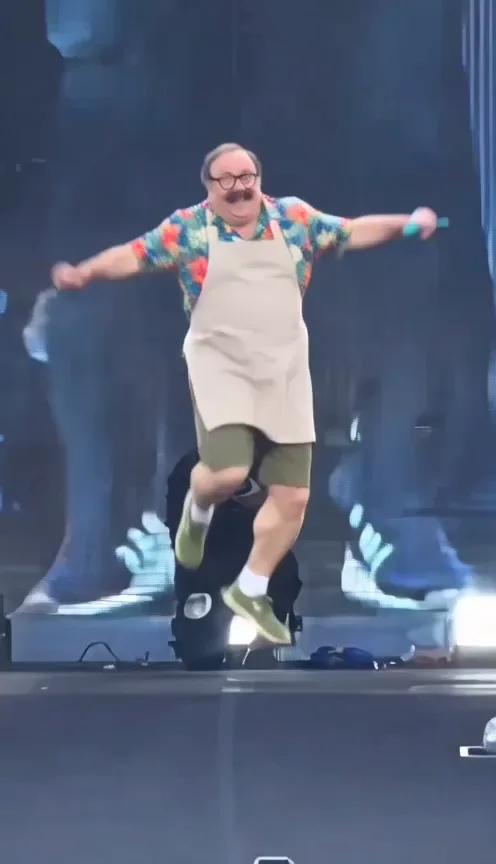 Put me in
PSY Concert Entrance
1 person · 15 s
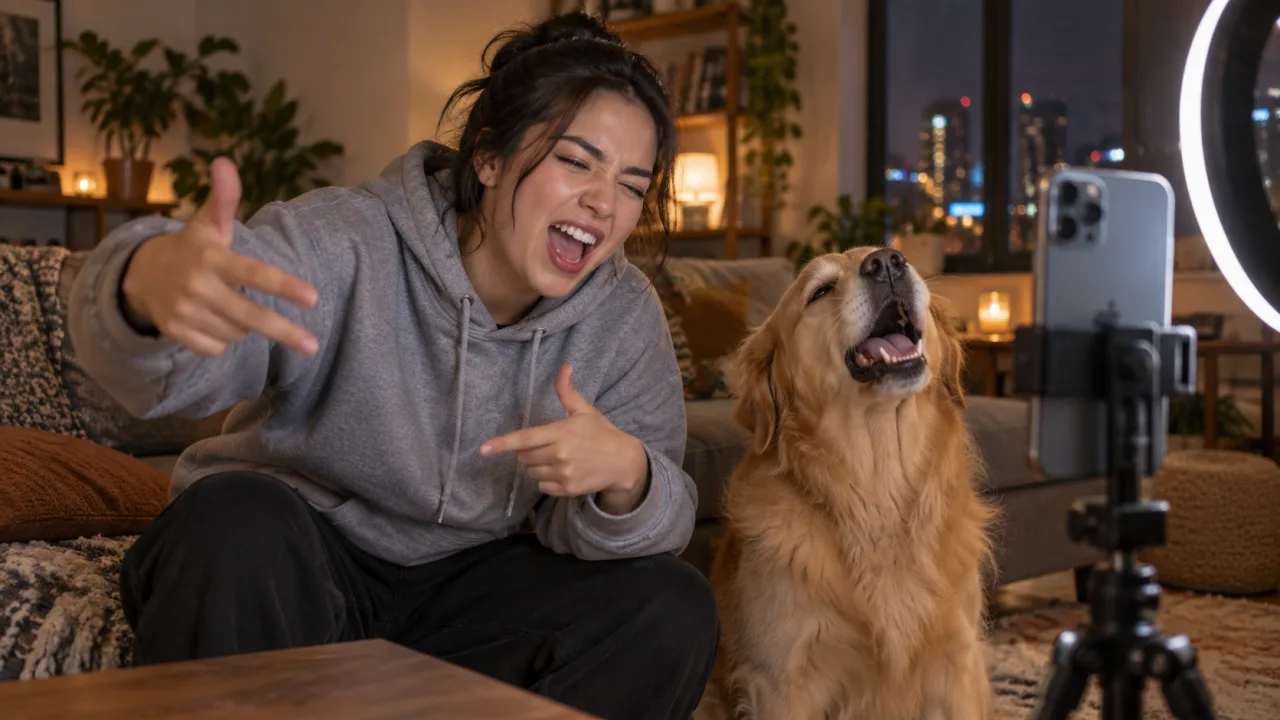 Put me in
ABCDEFG I Need Money
1 person · 10 s
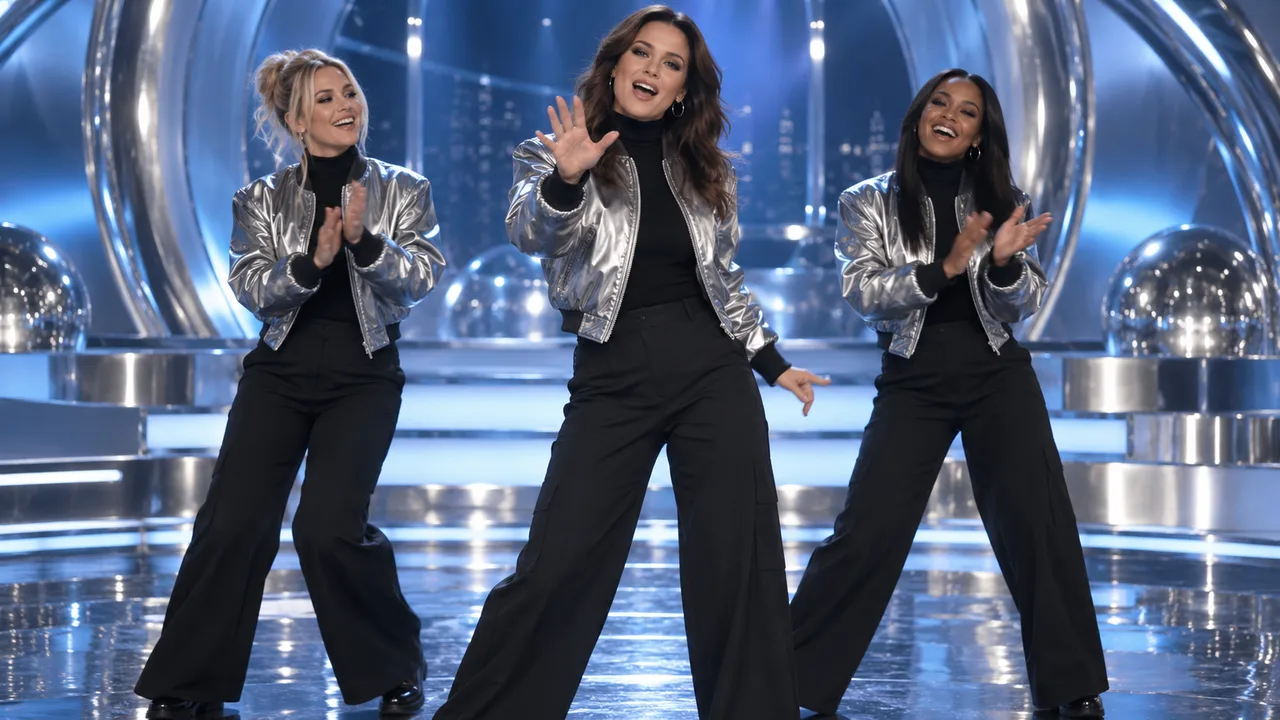
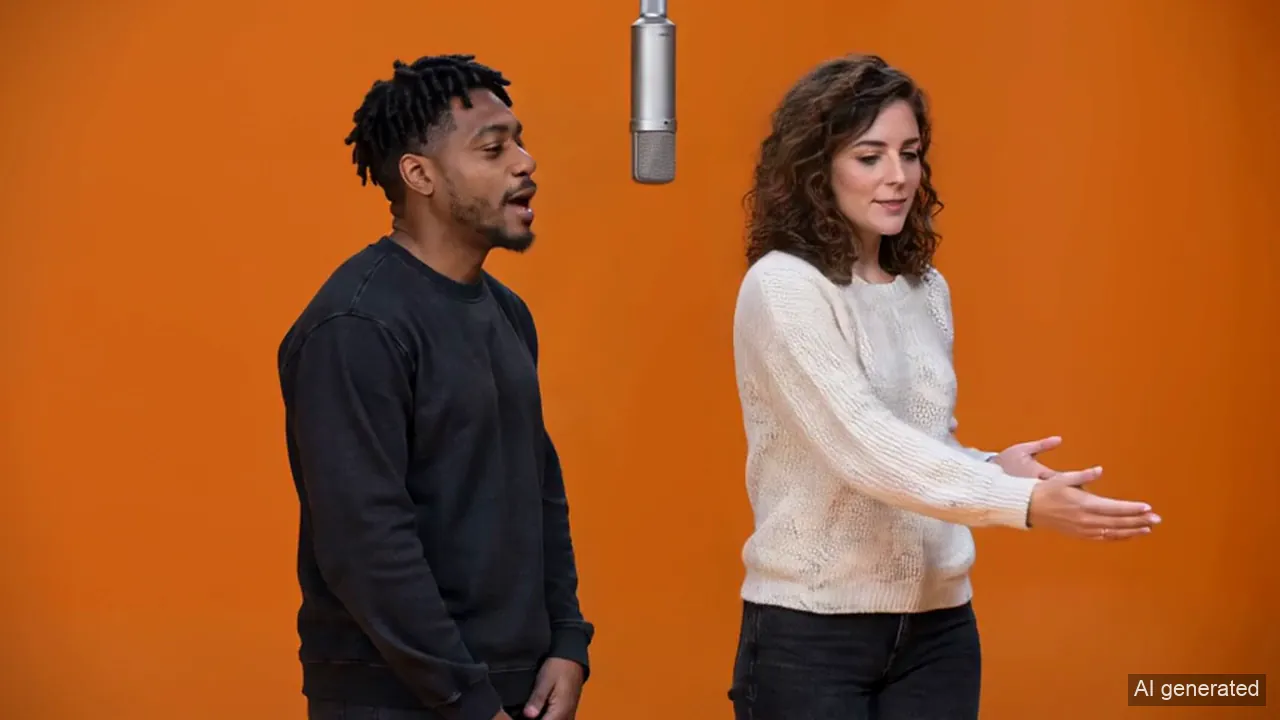 Put me in
Hotel Lobby
2 people · 15 s
Frequently asked questions
- How do people use the Fish Cutting Meme as a trading joke?
- Traders caption the fish-cutting action as a joke about entering a trade at exactly the right price. The kitchen scene itself has nothing to do with markets.
- Why do some versions say Grandpa said he'd handle dinner?
- That caption is associated with versions featuring a family member as the cook. It gives the fish-cutting scene a dinner joke instead of a trading reference.
- Can I use my photo for a Fish Cutting Meme AI version?
- Yes. Upload one clear, front-facing photo of one adult who agreed to appear. Public figures, anyone under 18, and pets are not supported.
- Does my photo version follow the original fish-cutting action?
- Yes. Your video follows the original clip shot for shot, with the same cuts and camera moves.
- Can my Fish Cutting Meme AI video use the original sound?
- Yes. It plays the trend's original sound from the first second, in place of the sound the AI makes.
Read more
How to Make a Fish Cutting Meme Video With Your Own Photo
Create a Fish Cutting Meme video from one photo, choose an image for the wide kitchen scene, and follow each step from upload to download.
Dance With Santa AI Explained: A Dancer Beside Santa on a Red Carpet
What the Dance With Santa AI clip shows: a dancer beside a man in a Santa suit on a red carpet by a lit tree, and how to make yours from one photo.
How to Make a Restaurant Dance AI Video From a Single Photo
Make a Restaurant Dance AI video from one photo: what to have ready, the steps, mistakes to avoid and a timed walk through the clip, from $9.99.